I am not a dietitian, so I must preface this by saying you are getting information from a non-medical professional.
The meal plans listed below are copied directly from informational packets I have been given from recovery meetings. In these packets, it states to seek a dietitian or medical professional to ensure you are getting the right amount of nutrients for your body.
Since these meal plans are given freely to anyone who comes to a meeting, I do not see any harm in putting them here. But please, please, PLEASE, be cautious! Again, I am not a medical professional, and these are NOT A CURE. I am just a person in recovery spreading some free knowledge of what helped me, in hopes that it will help you too.
These plans are not a diet. A diet implies a desire to lose weight. These meal plans are designed to help compulsive/disordered eaters control their eating behaviors, not the number on the scale.
The meal plans typically start someone’s journey to a much happier and saner life, but they are not going to fix any of the inner turmoil they are struggling with. That requires much more work.
It’s true that several heavier compulsive eaters lose weight from practicing one of these meal plans over a sustained period of time because their overall food intake becomes regulated. Some compulsive eaters do not change in body weight; their habits just become structured, and they arrest the disordered eating behavior(s).
My first 60 days of abstinence were spent using meal plan #1 (listed below), and I lost 12lbs with minimal exercise and no calorie counting. I was then referred to a dietitian, and that professional took meal plan #1, added more food to it, and as of March 1st, 2025, I have lost 31lbs. I do not eat between meals, I do not eat my binge foods, and I do not use any compulsive/disordered food behaviors.
Either way, do not expect your body to change the way you’d expect it to change if you were dieting. It may or may not result in weight loss. These are not designed as a diet and are flexible enough to be altered for each person’s needs, which is why it is so important to see a dietitian. Preferably, one that specializes in helping others with eating disorders or has experience with ED recovery programs.
My Suggestion
These plans account for everything you are to eat in a day. Meaning, these are designed to eliminate snacking between meals (unless you choose a plan with a snack). Part of arresting this illness is committing to no more grazing, snacking, or compulsive food choices. For example, I eat 3 times a day with 1 optional snack. The only exception I have discussed with my dietitian is my beloved coffee - I can have 1 or 2 in a day as long as I use sugar-free flavoring syrups and unsweetened non-dairy milks. If I have finished everything allotted on my plan for the day, I don’t also eat a bag of popcorn with a movie at 10 pm. I simply watch the movie without the extra food.
I will reiterate that the purpose of these meal plans is to create structure and healthy boundaries with food to arrest disordered eating. Eating that bag of popcorn could be a slippery slope to permitting myself to eat outside my meal plan guidelines at other times. This does not mean that the popcorn is bad, too high in calories, or a binge food! It means that by following my meal plan, I am honoring the commitment I made to staying abstinent. If I don’t see my meal plan as a form of medication/treatment that I need to take to stay well, I will inevitably go back to compulsively eating.
Additionally, I had to stop eating/incorporating my binge foods to gain recovery and relief from this disease. Think of binge foods as various addictive substances like cocaine, alcohol, cigarettes, etc. Every single time an addict uses one of those substances, it makes it much harder for them to stop. For me, and most compulsive eaters I know, a binge food creates the same outcome. Every time I ate a donut, ice cream, chocolate, pizza, or anything else on my binge foods list, I would crave it that much more until I could eat it again. Therefore, refraining from my binge foods altogether has been even more important to me than the meal plan itself! I would not be able to follow any type of plan if I were still eating those foods.
To put it simply, I suggest that you…
Stop eating binge foods.
Follow one of the plans for a week or 2 to see how it feels. If you don’t like it, try a different one.
Do not eat between any meals or planned snack (only 1 snack is permitted in 3 of the 4 plans).
You can use a food scale or measuring cups to measure the serving sizes; however, I prefer a food scale because measuring by weight rather than volume is more “precise”. A gram is always a gram, an ounce is always an ounce, but a cup isn’t always a cup.
Here are some links to various food scales and measuring cups if you’d like to purchase one!
Below are 4 recovery-based meal plans and the meal plan I use that my dietitian has made for me. I will urge one last time, start here, but please follow up with a dietitian, preferably one who is experienced with eating disorder recovery.
Example Meal Plans
Meal Plan #1
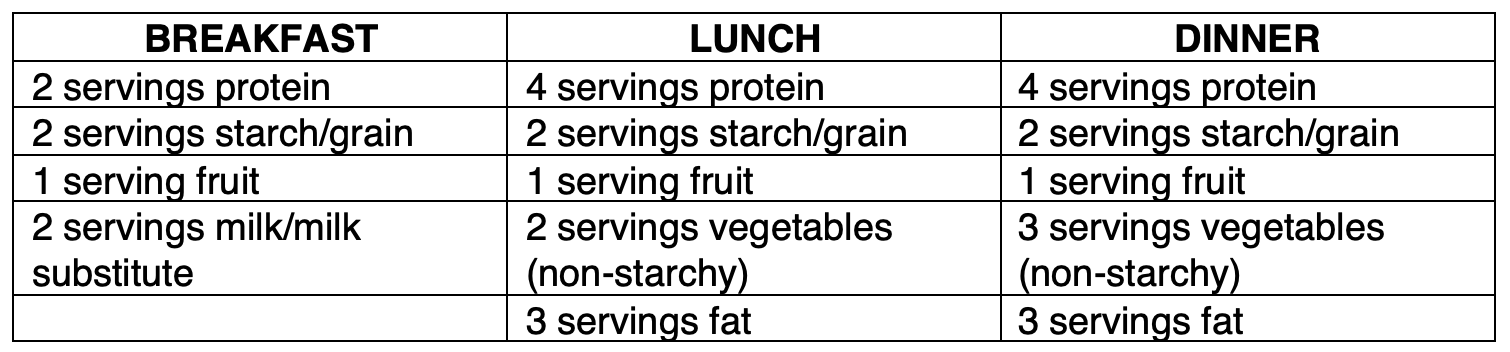
3 meals a day, zero in between, 1 day at a time
Meal Plan #2
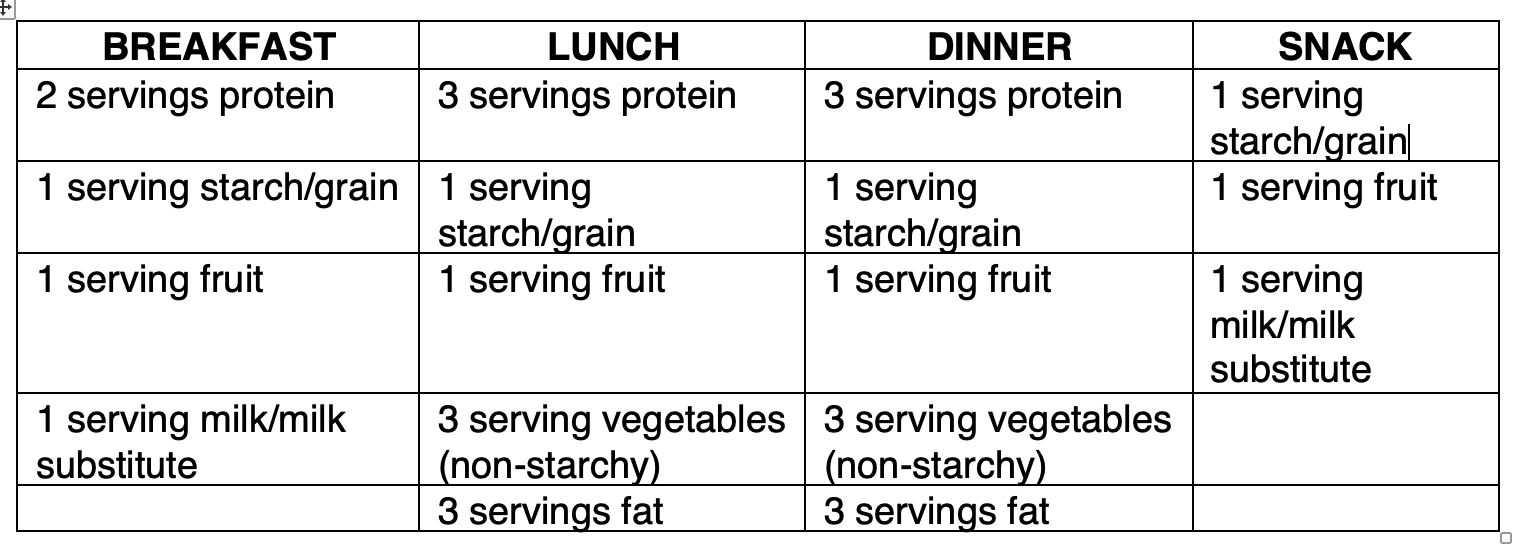
Reduces certain components from meal plan #1 and incorporates them into a snack.
Meal Plan #3
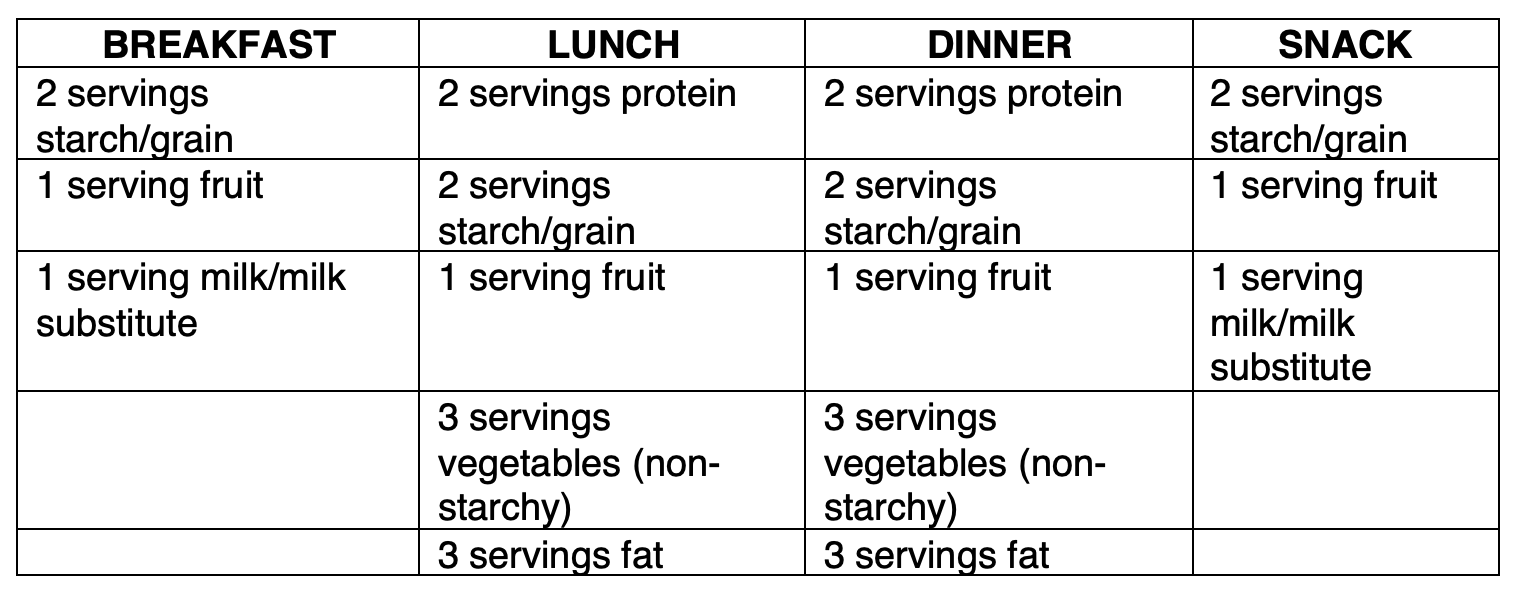
High Carbohydrate option with 1 snack.
Keep in mind that some people are sensitive to carbohydrates and struggle with the volume of food as well.
Meal Plan #4
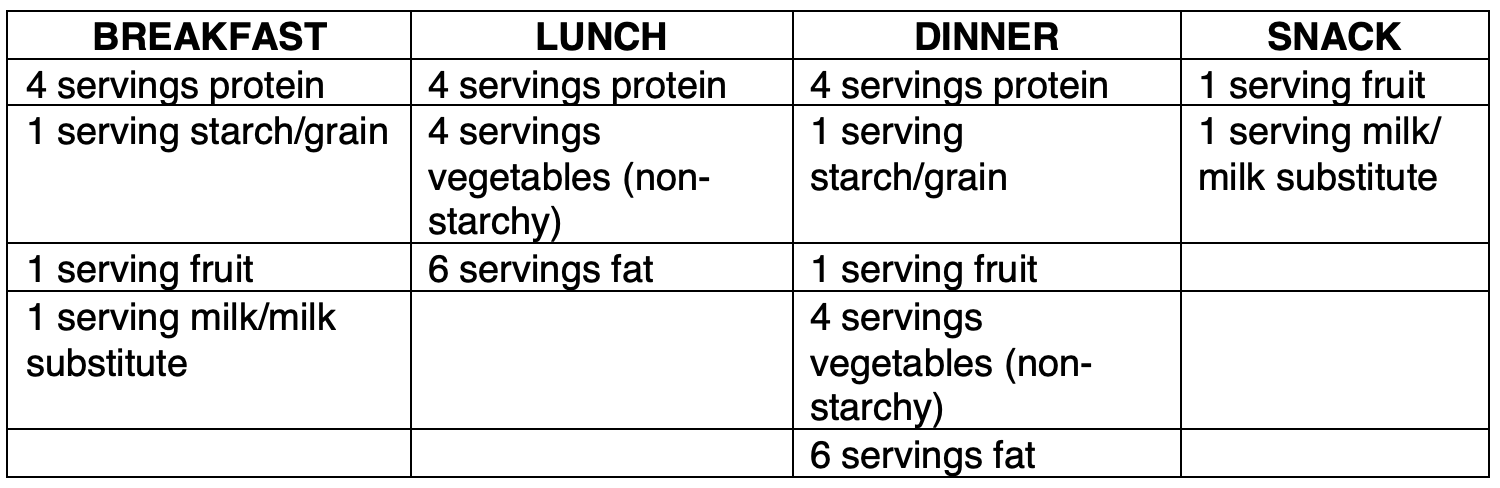
High Protein/Low Carbohydrate option with 1 snack.
6 servings of fat = 28-32g total.
Calcium supplementation may be required. You may substitute 4 ounces of low-fat cottage, ricotta, or mozzarella cheese or 2 ounces of hard cheese for the milk serving. Milks need to be calcium fortified. Use variety; do not eat the same food more than once a day.
Serving Size Break Down
Below is each component and how much of each makes up a serving. Please submit any questions to me on my contact page about serving size. Again, I am not a dietitian, but I may be able to pass the question on if I do not know the answer myself.

These are the serving sizes based on weight (oz and grams) and volume (cups, tsp’s, tbsp’s, etc.)
Important Note - Measuring volume is not as accurate as measuring weight. As I stated - a gram is always a gram, and an ounce is always an ounce, but a cup is not always a cup.
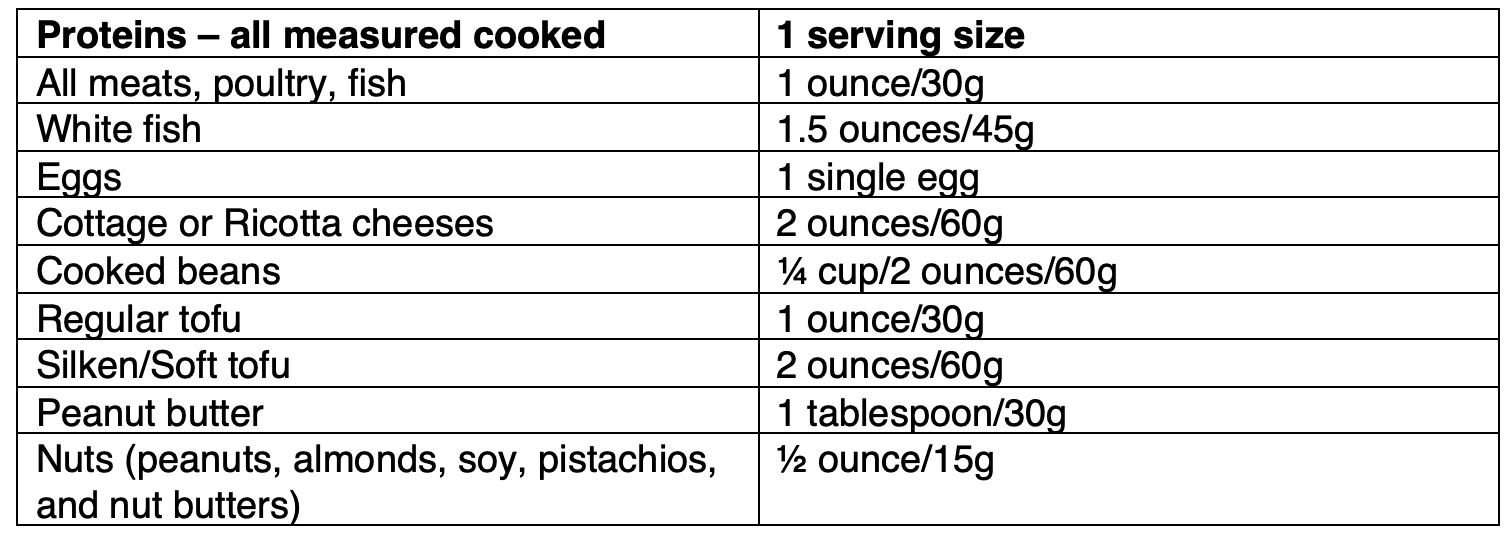
These are various types of protein and their serving sizes.
For example, if the meal plan says you get 4 servings of protein for lunch, that equates to 4 ounces of chicken or 6 ounces of white fish.
Protein can be weighed before or after it has been cooked. Keep it simple - stick to the serving amount regardless of cooked or not. If you want more, weigh after cooking. If you want less, weigh before cooking.
This is not a complete list of proteins. You are not limited to the examples. Use Google, read my “Different Foods” post, or ask a dietitian to help expand your options!
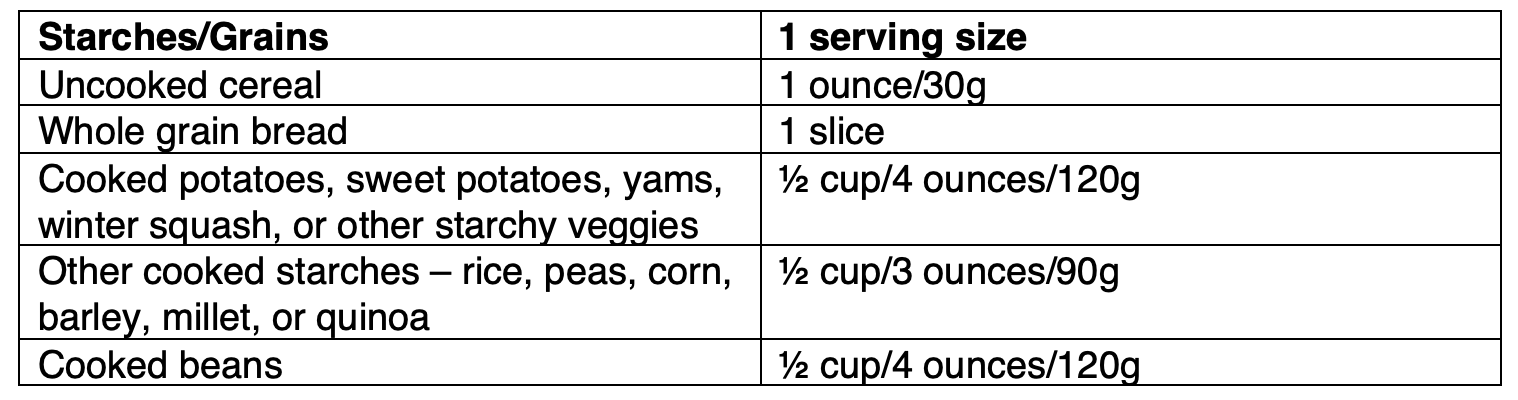
These are various grains, starches, and starchy veggies along with their serving sizes.
For example, if your meal plan says 2 servings of a grain/starch for lunch, that equates to 6 ounces of rice or 8 ounces of potatoes.
Grains/Starches/Starchy veggies can be weighed before or after they have been cooked.
This is not a complete list of grains/starches/starchy veggies. You are not limited to the examples; these are just the most common foods that people use. Resources like Google, my “Different Foods” post, or a dietitian can help expand your options!
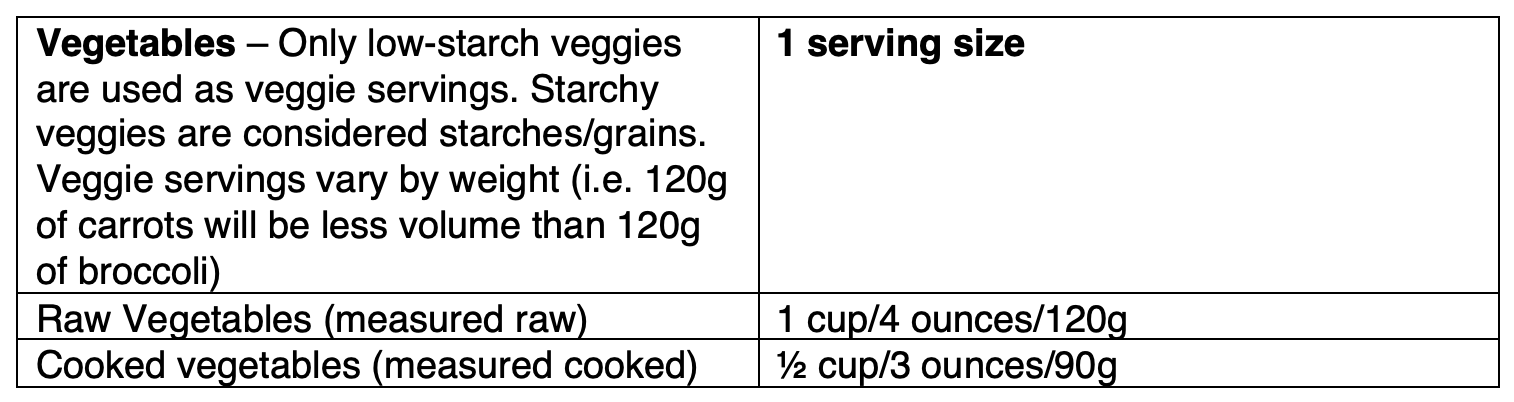
These are the various serving sizes for raw or cooked vegetables.
For example, if your meal plan says 3 servings of vegetables for dinner, that equates to 12 ounces of raw vegetables or 9 oz of cooked vegetables.
Resources like Google, my “Different Foods” post, or a dietitian can help expand your options!
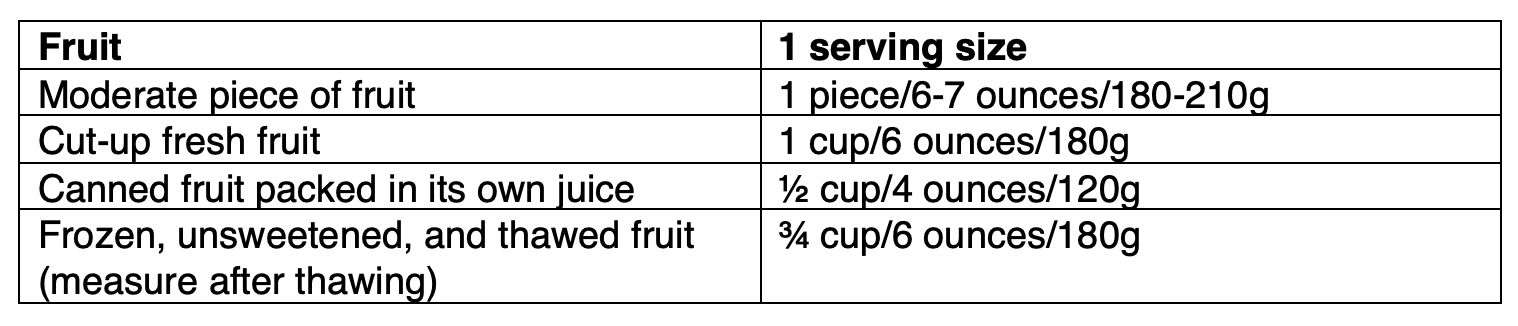
These are various fruits and their serving sizes.
For example, if your meal plan says 1 serving of fruit for breakfast, that equates to 1 piece (like a banana) or 6 ounces/1 cup of fresh fruit (like a chopped banana and some blueberries).
Resources like Google, my “Different Foods” post, or a dietitian can help expand your options!

These are the various serving suggestions for milk or milk alternatives.
For example, if your meal plan says 1 serving of milk/milk substitute, that equates to 8 ounces of milk or yogurt of your choice.
Resources like Google, my “Different Foods” post, or a dietitian can help expand your options!
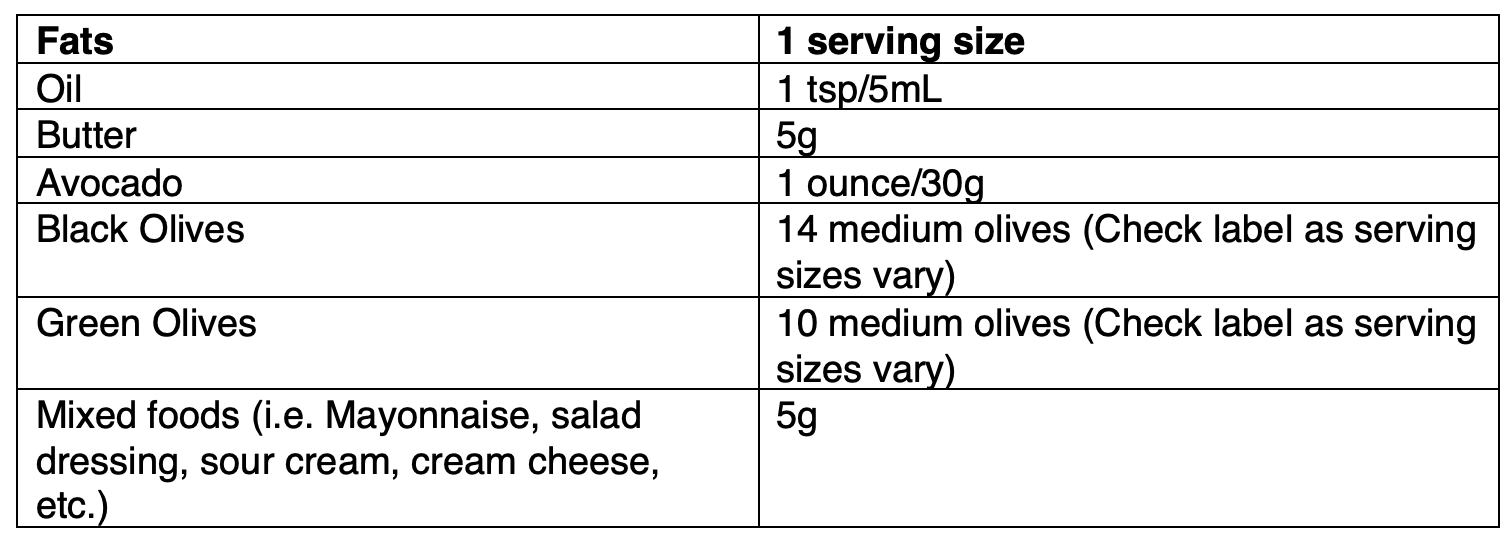
These are various fats and their serving sizes.
For example, if your meal plan says 2 servings of a fat, that would equate to 2 tsp of oil.
My dietitian has said it’s okay to use a little more oil when cooking because it cooks down. It is entirely up to you if you want the cooking oil to be included in the serving size.
Resources like Google, my “Different Foods” post, or a dietitian can help expand your options!
Important Notes to Consider
Some components are “stackable”. For example, you do not need to do all cooked or uncooked veggies. You can do 6 ounces of greens (fresh salad greens) and add 3-4 ounces of cooked veggies to it or on the side. Another example for starches, you can do 4 ounces of beans, and 4 ounces of starchy veggies like squash.
Some components are interchangeable. For example, cheese can be seen as both a protein and a fat. 1 slice would be 2 fats or 1 protein. You can choose which component category it falls under when planning and making meals.
Keep in mind any medical conditions you may have that could keep you from eating according to these plans. For example, if you had weight loss surgery, it's not likely that you can eat the full serving sizes. Ask your doctor if you can do a variation of one of these plans, such as doing half of whats alloted.
Do not choose a plan based on diet culture. I almost chose the high-protein plan because high-protein and low-carb diets have been so glamorized in American culture. I ended up choosing plan #1 to teach me how to eat the amount that humans are supposed to eat, and because it looked like it included the most amount of food. My dietitian increased certain components for nutritional purposes, not for weight loss or diet glamorization.
My Dietitian-Designed Meal Plan
This plan was originally Meal Plan #1. My dietitian did some research on it and tweaked certain components. Below are screenshots of the component breakdown and the serving sizes per component I get at each meal.
This meal plan was designed for me and my body, so it may not work for you. You are more than welcome to give it a shot, but don’t come after me all angry if you don’t like it!
I do not eat any binge foods or anything with sugar listed in the 1st 3 ingredients. I also do not snack between meals. I am allowed as much water, black coffee, flavored water, zero sugar soda, or tea as I please, but I limit the soda to (1) 12oz soda per day, or less. As mentioned before, I limit my flavored coffees to 2 a day, or less.
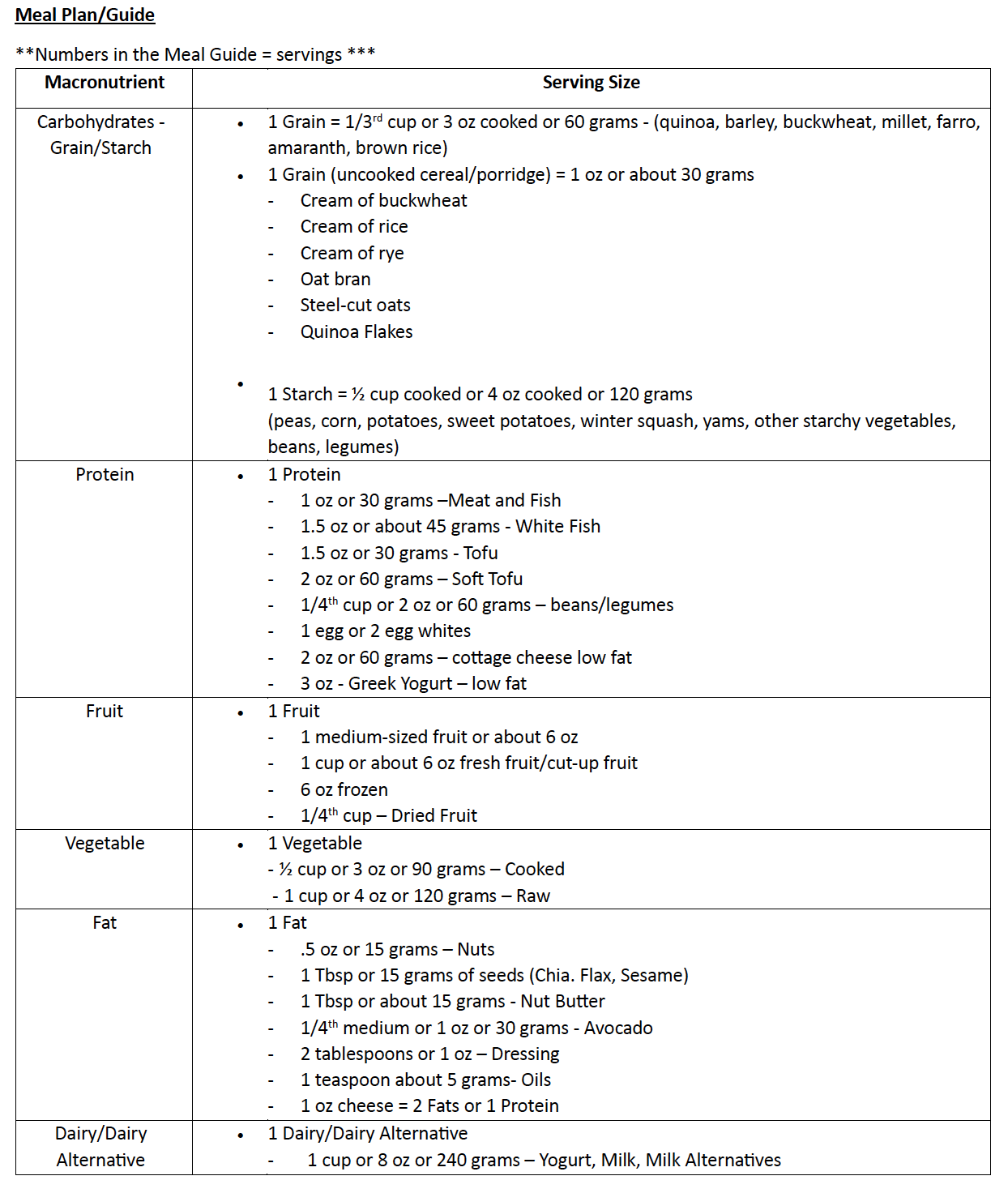
These are various components and how much is in 1 serving of each.
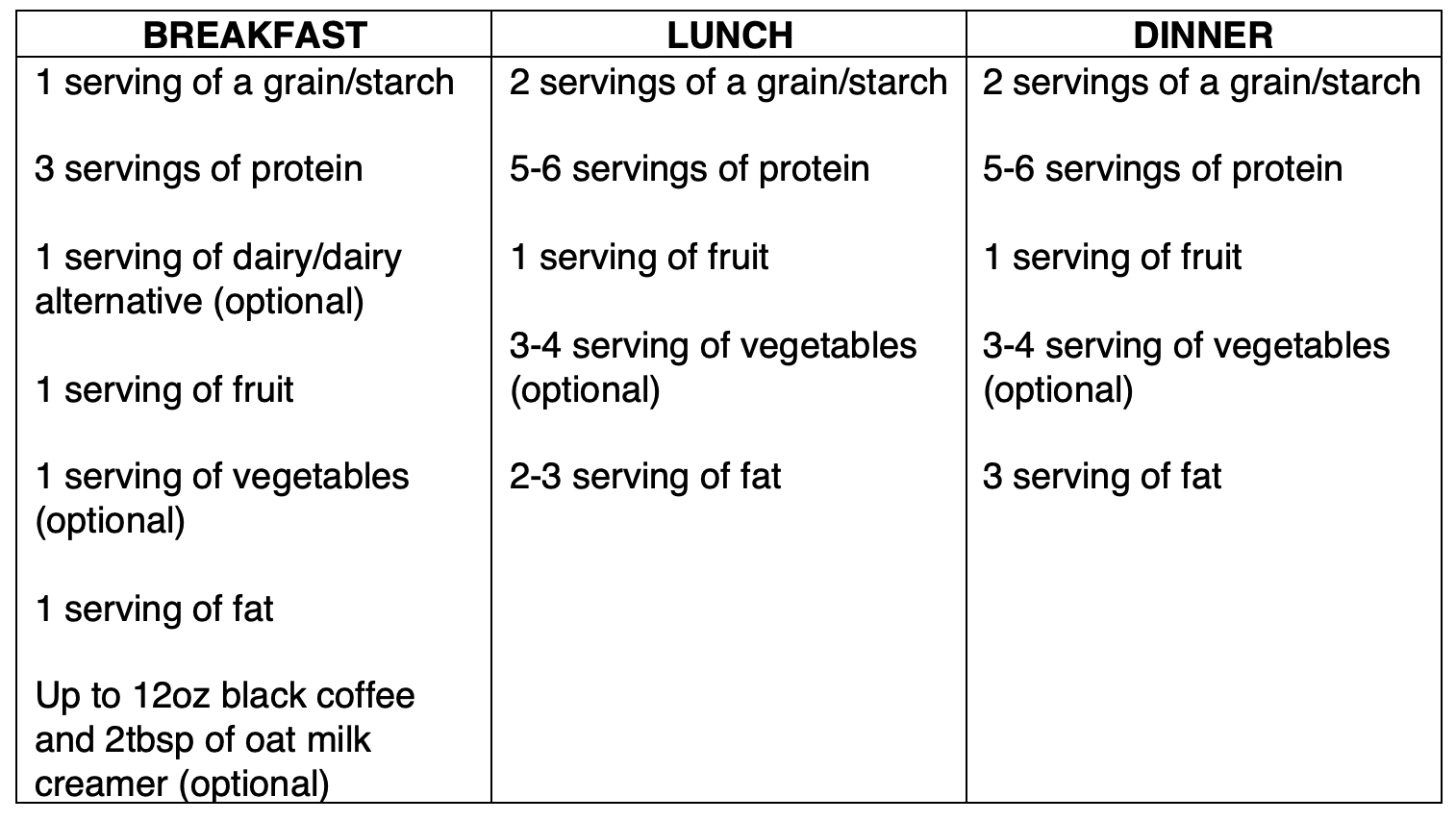
This is what my daily meal plan looks like! Compared to Example Plan #1, my dietitian increased my protein, my vegetables, and my fat.
You are welcome to try this plan, but keep in mind it is designed for me and my body’s needs.
If you have any questions, please don't hesitate to ask by using the Contact form and submitting your question. I will make sure to respond within 24-48 hours.